25-07 K15 OFFICE
The project is an adaptive reuse of a post-industrial interstitial space located between existing buildings in the city center, transformed into an architectural studio. Previously used as a technical back-of-house area, the space lacked daylight, spatial clarity and a defined identity.
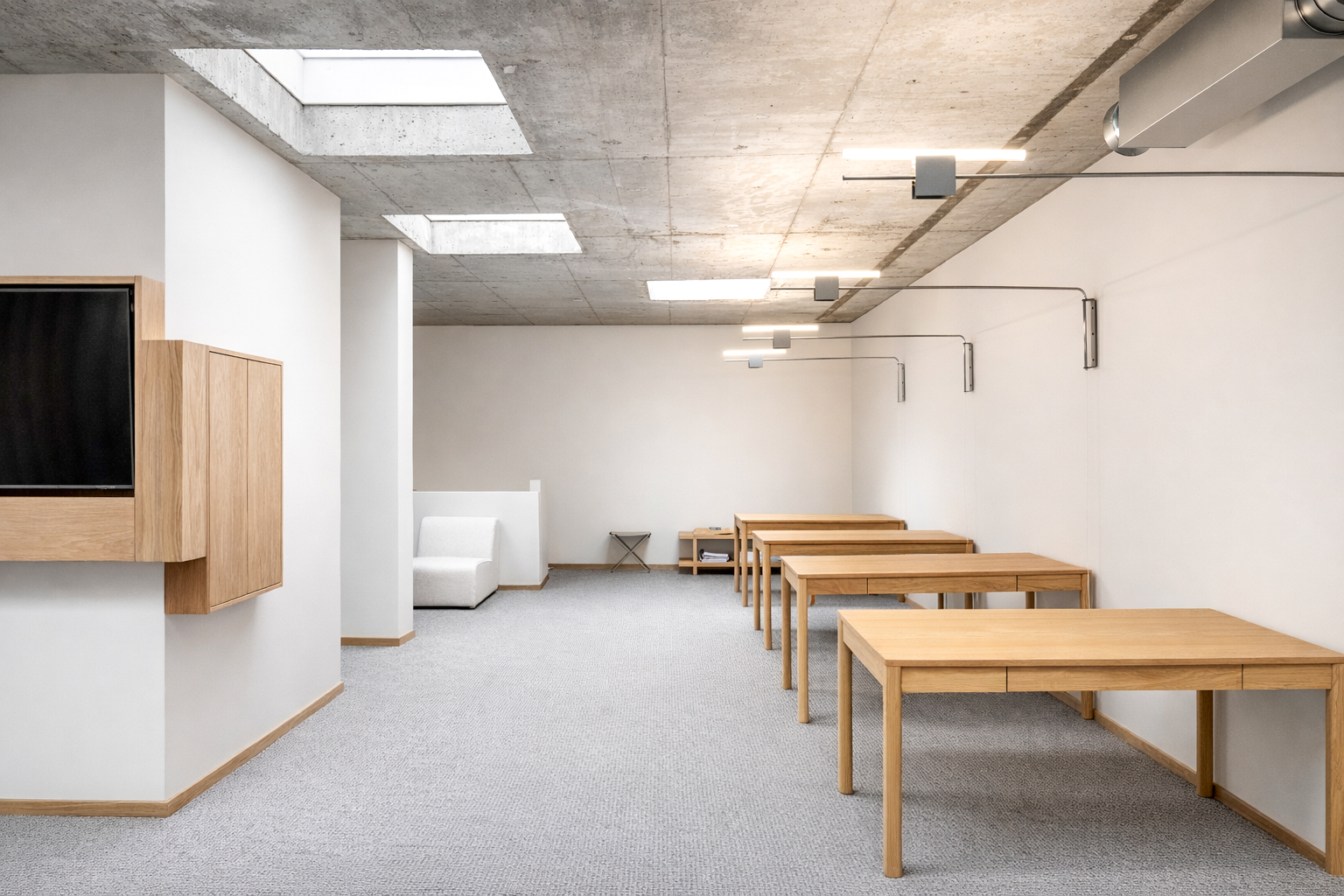
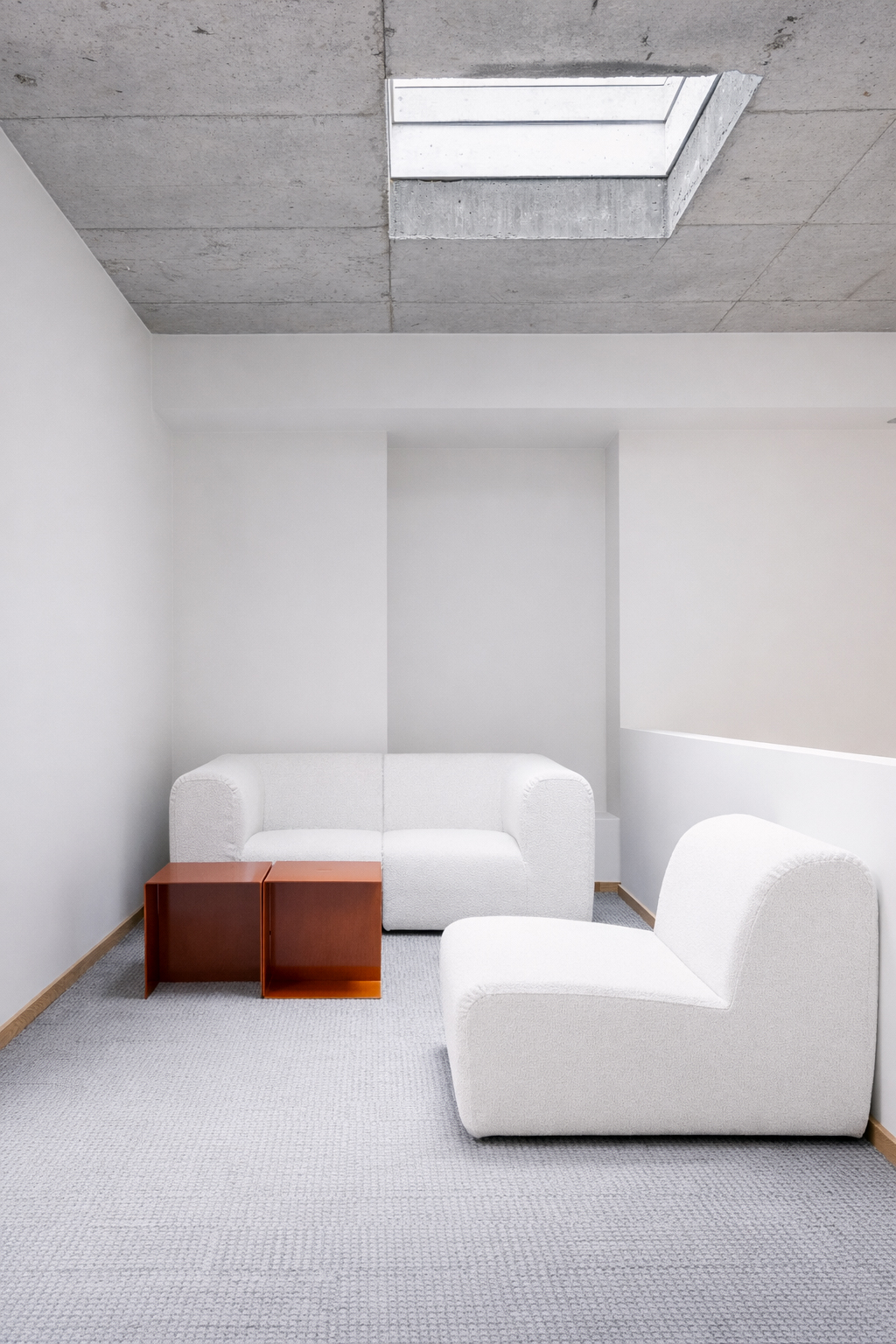
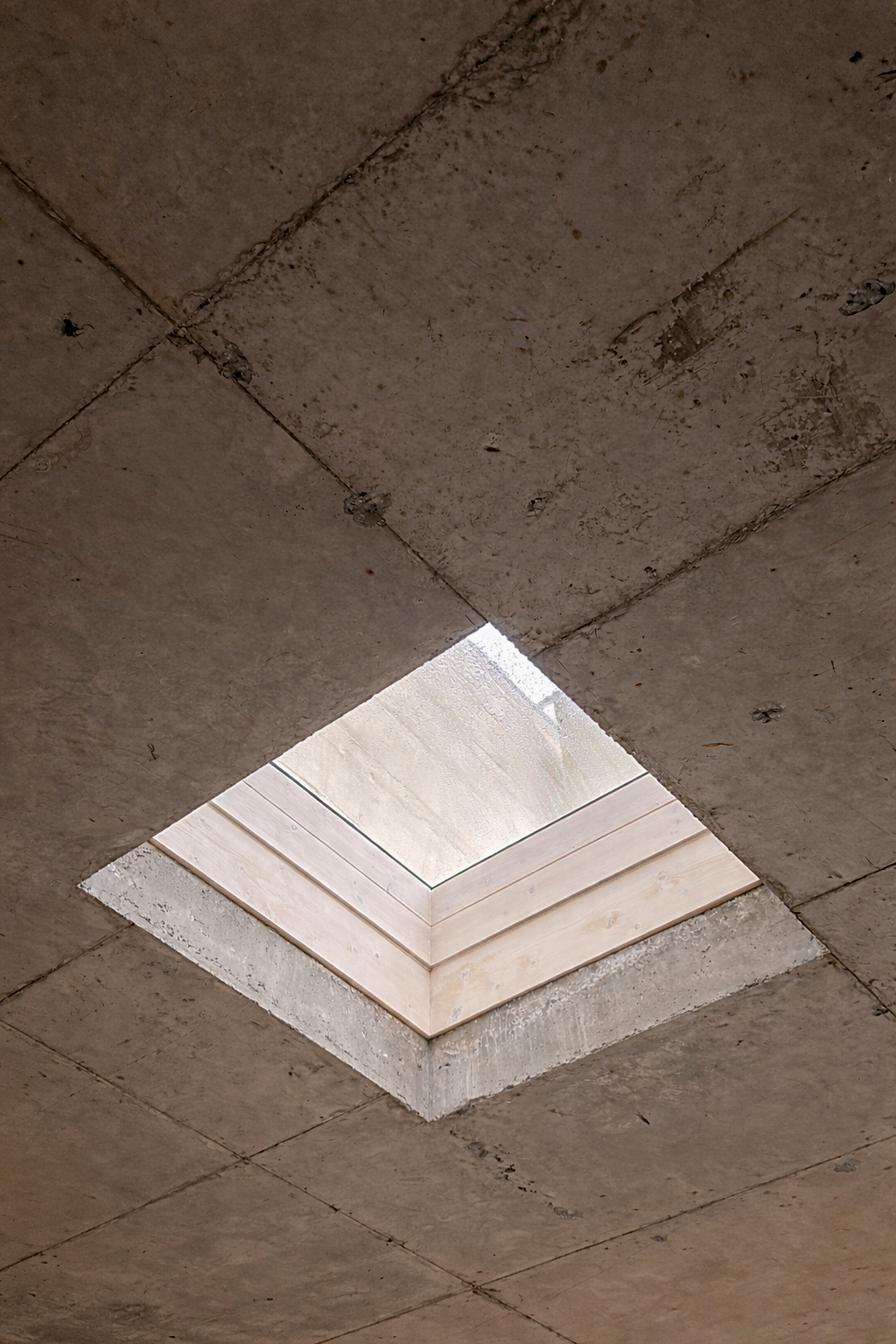
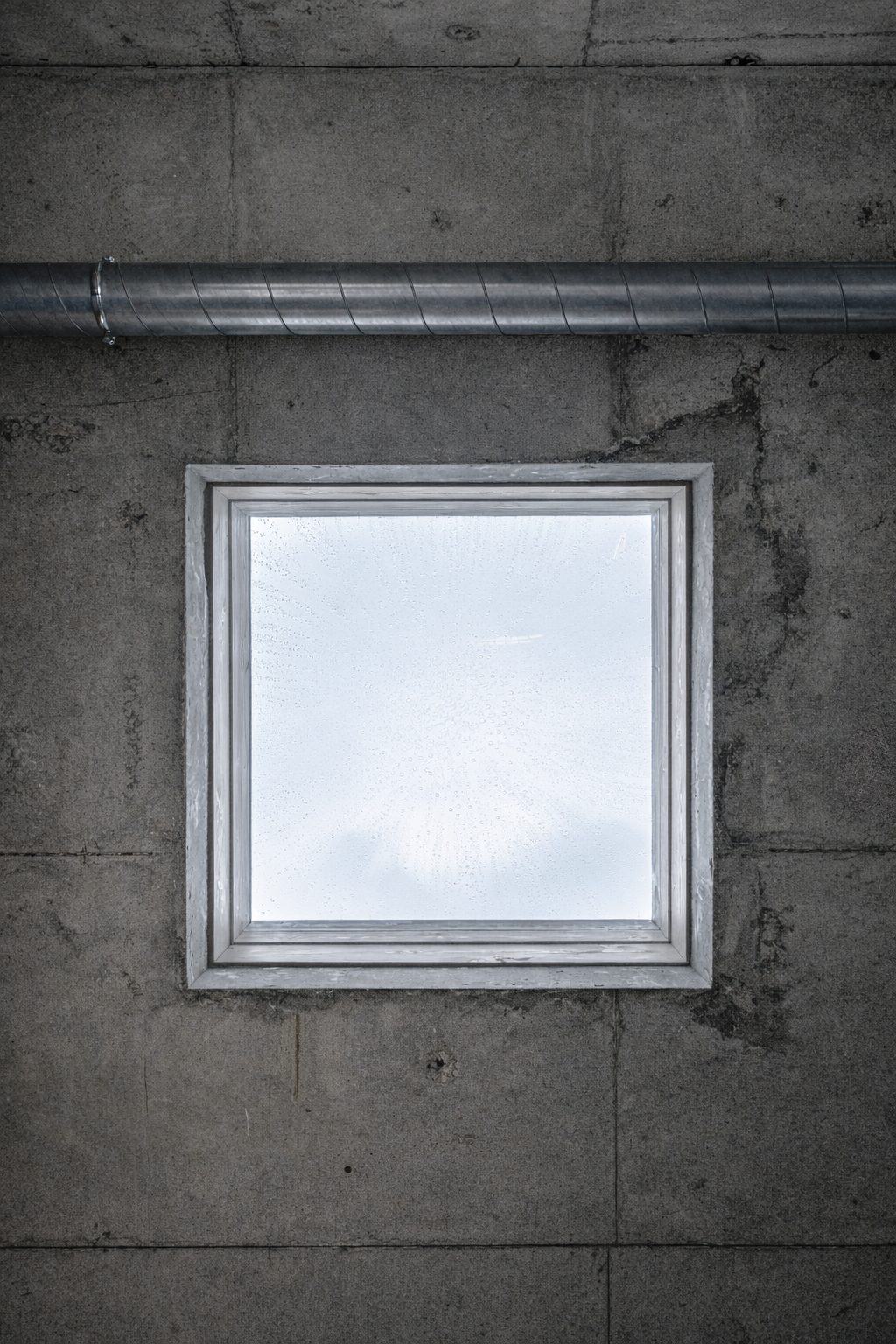
During the initial survey, original concrete roof openings were discovered — skylights that had been sealed and unused for decades. Their reopening became the foundation of the design concept and the key driver of the transformation.
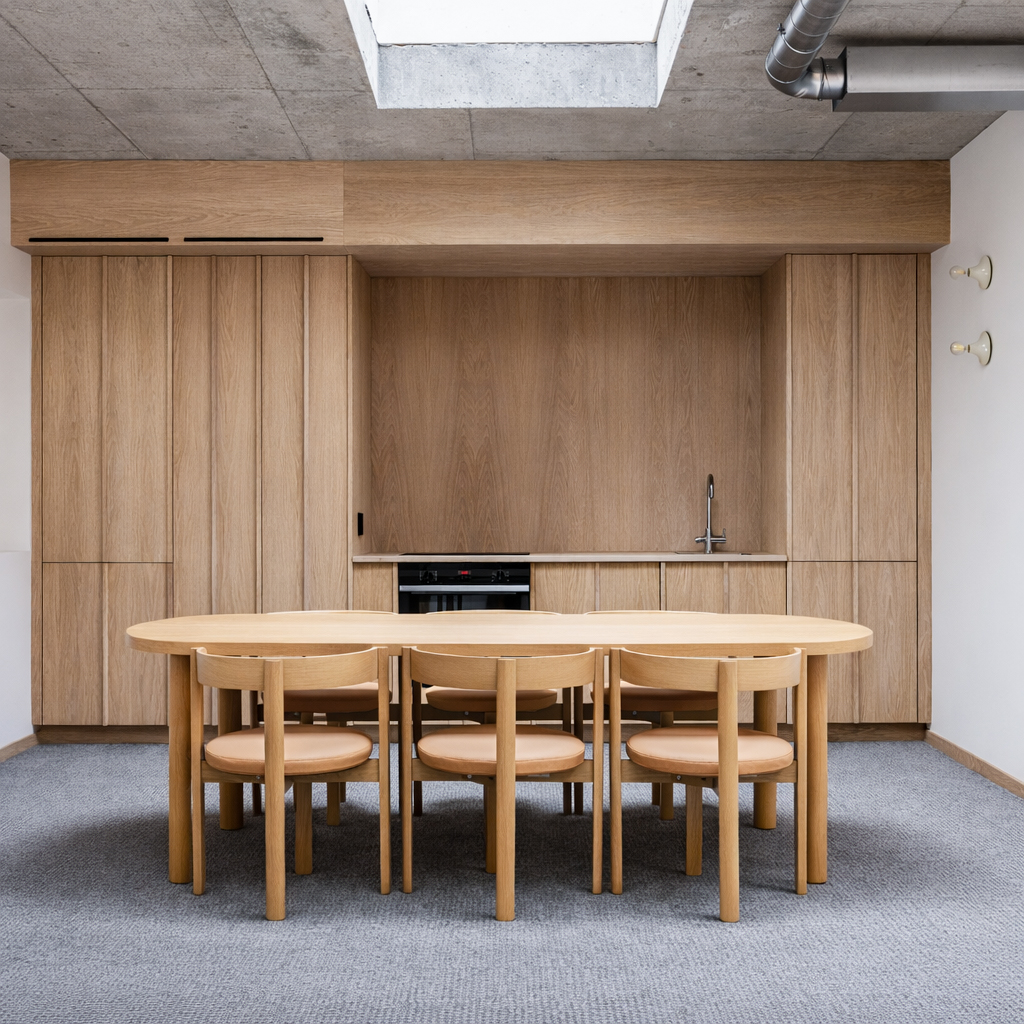
The project follows adaptive reuse principles. Instead of altering the existing structure, the design builds upon its inherent spatial potential. The functional layout and proportions of the interior are directly derived from the position of the skylights, which now provide the primary source of daylight and define the spatial rhythm of the studio.
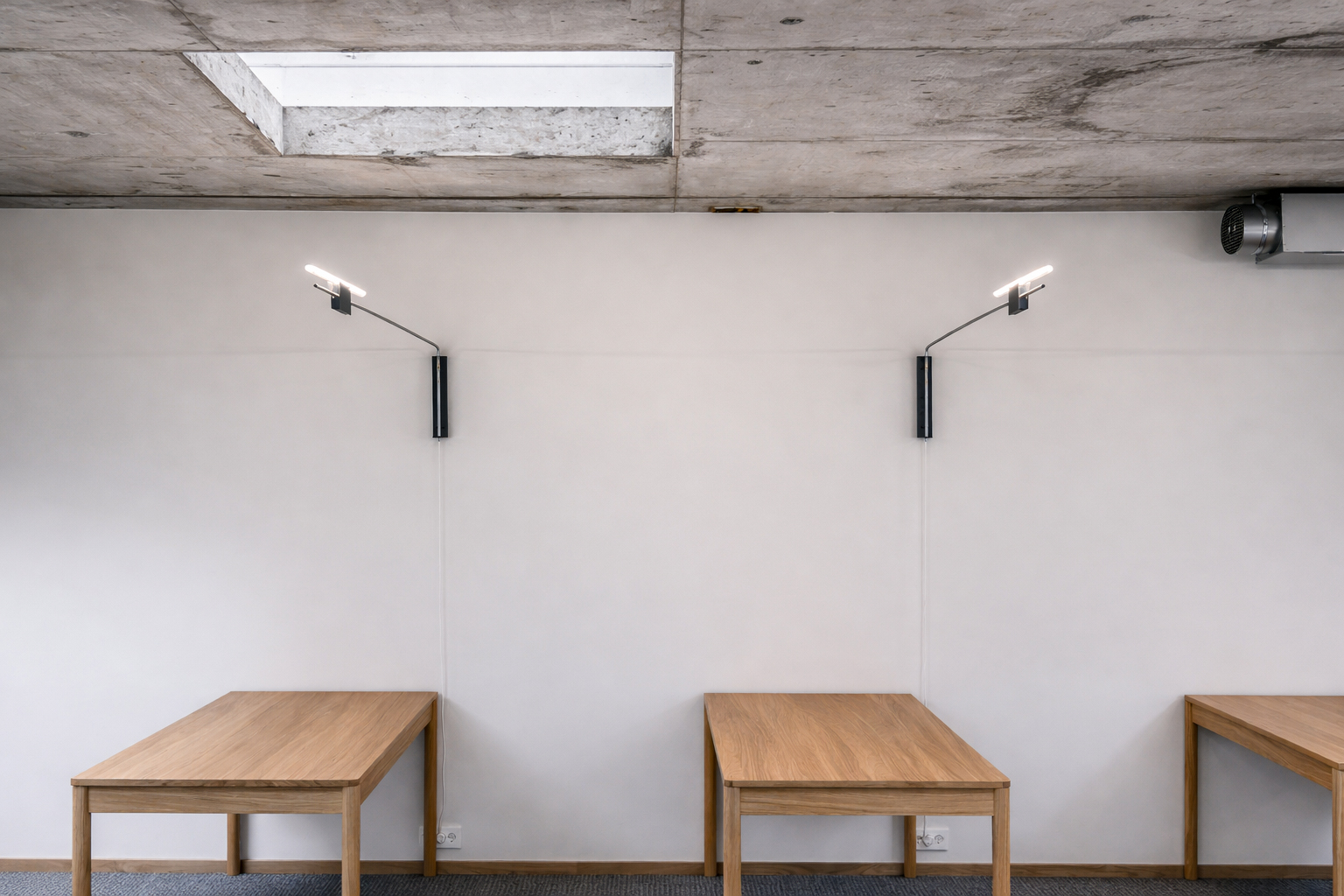
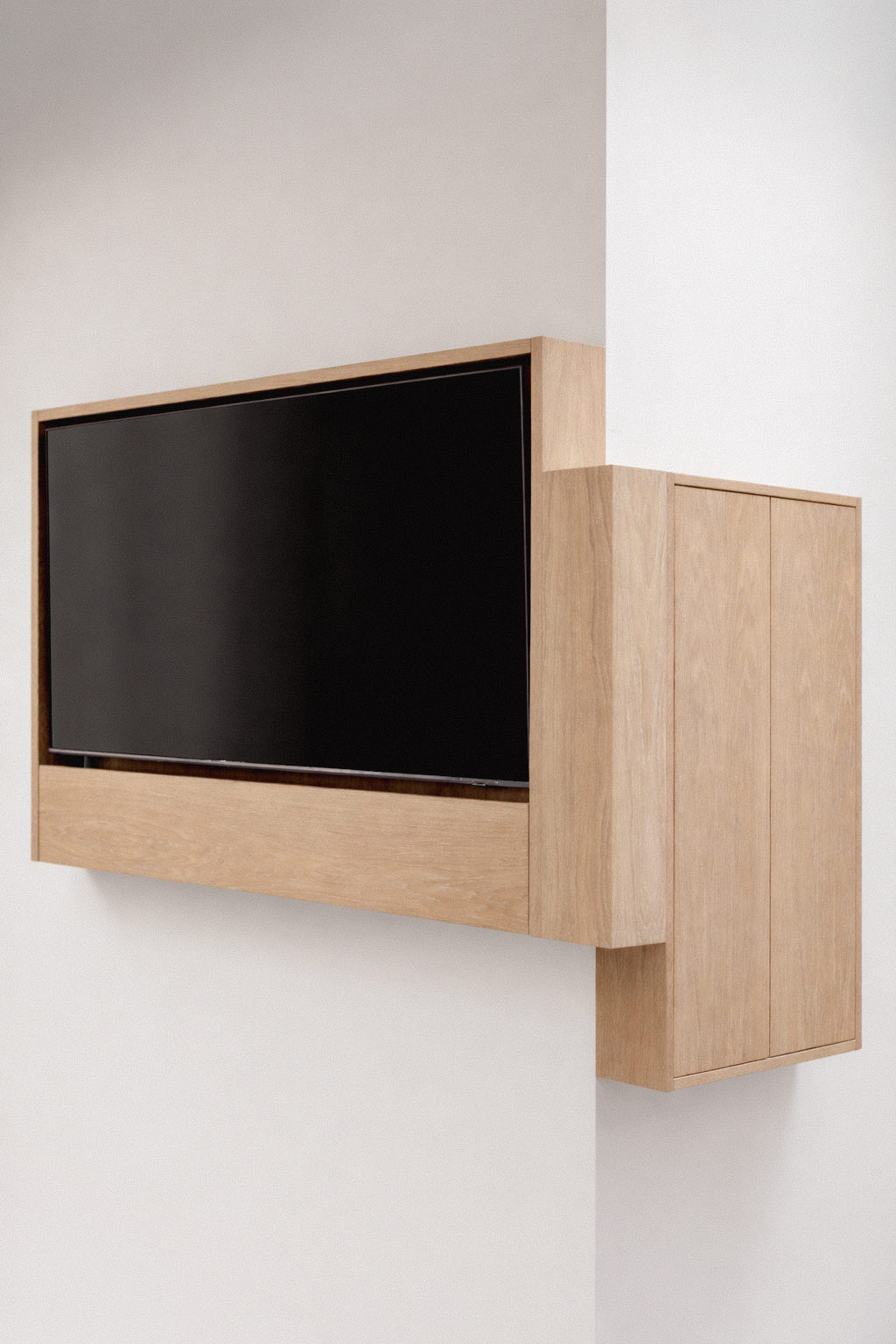
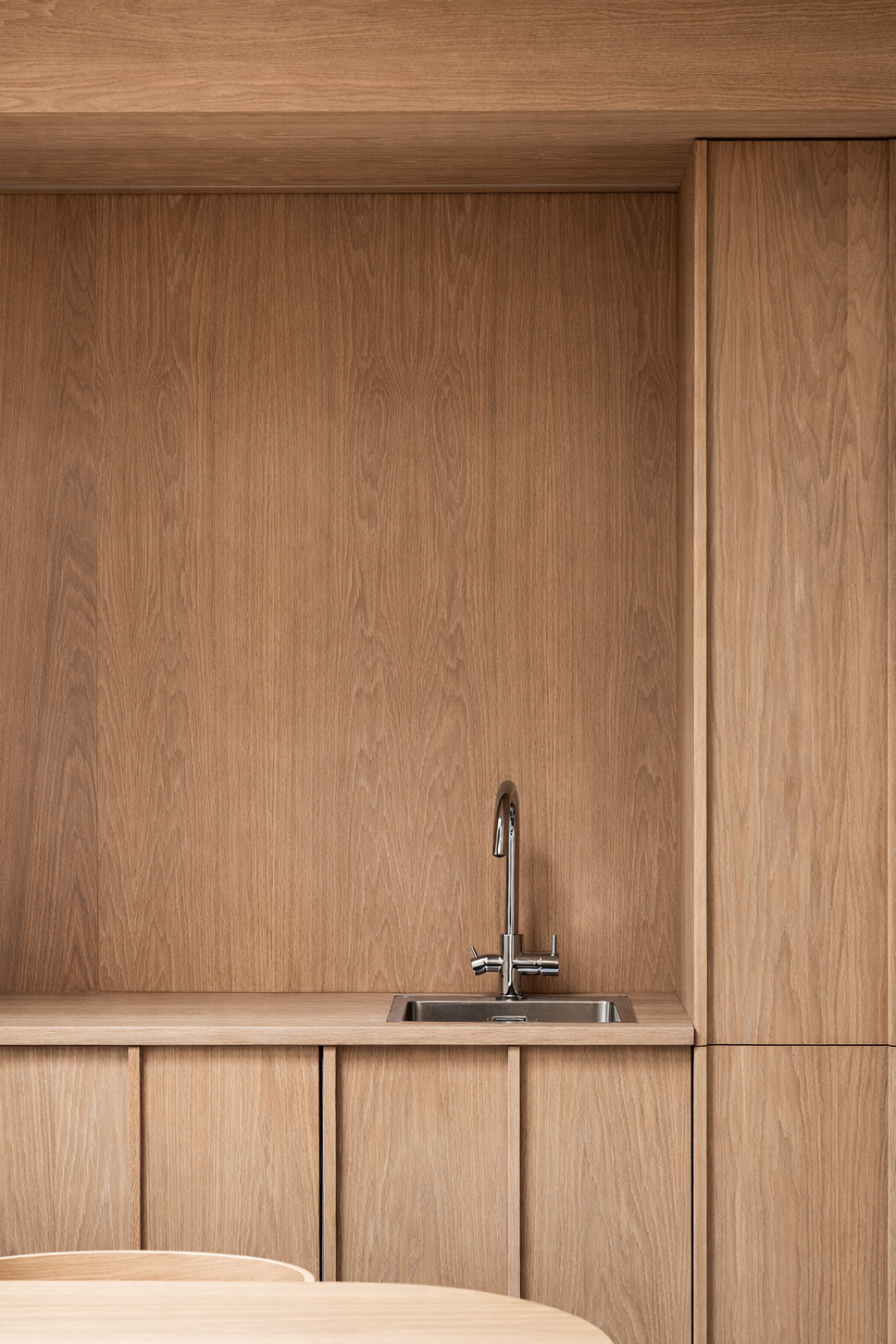
The interior is organized by freestanding oak volumes that structure the program without enclosing the plan. These elements define work areas, meeting zones and quieter spaces for focused individual work.
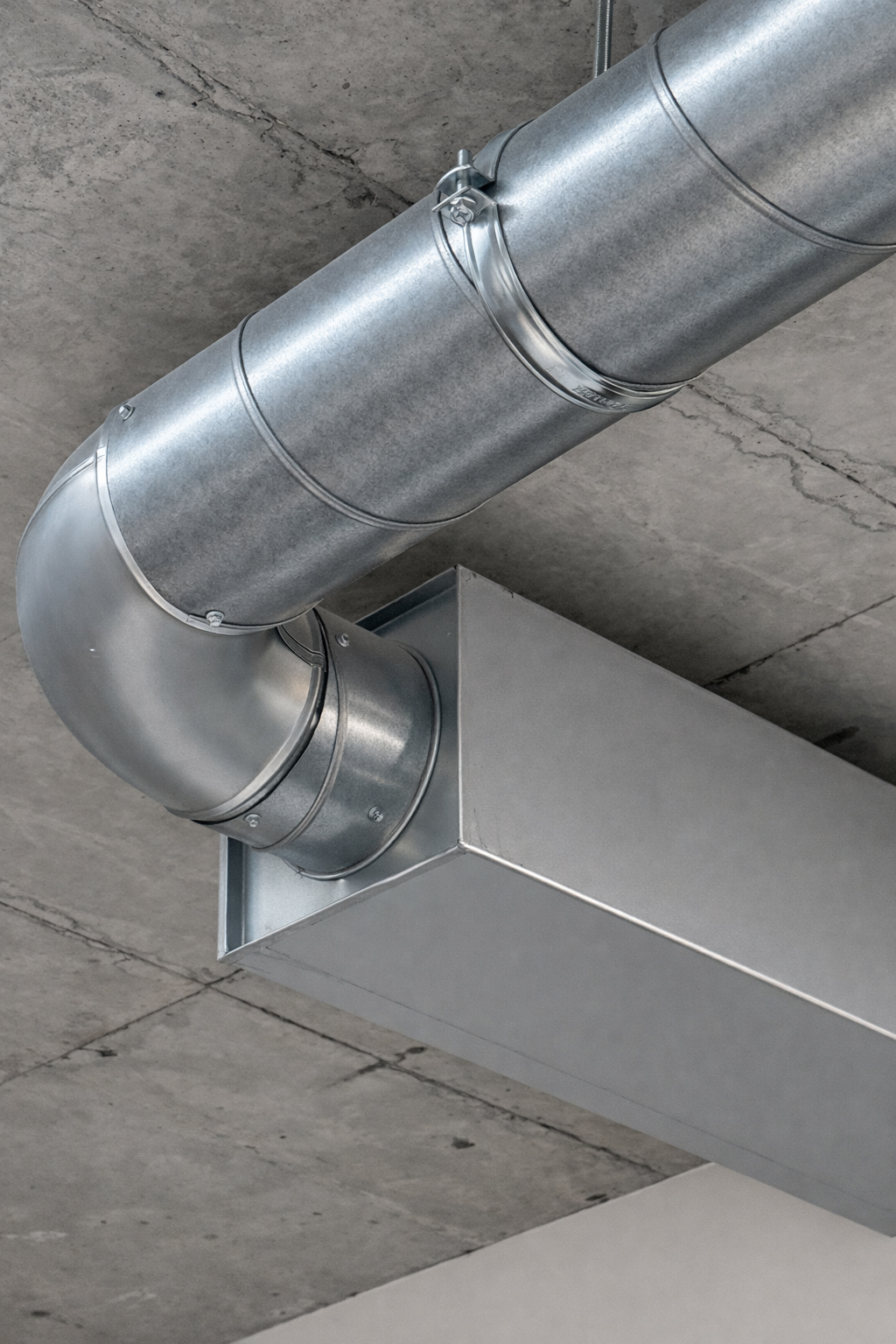
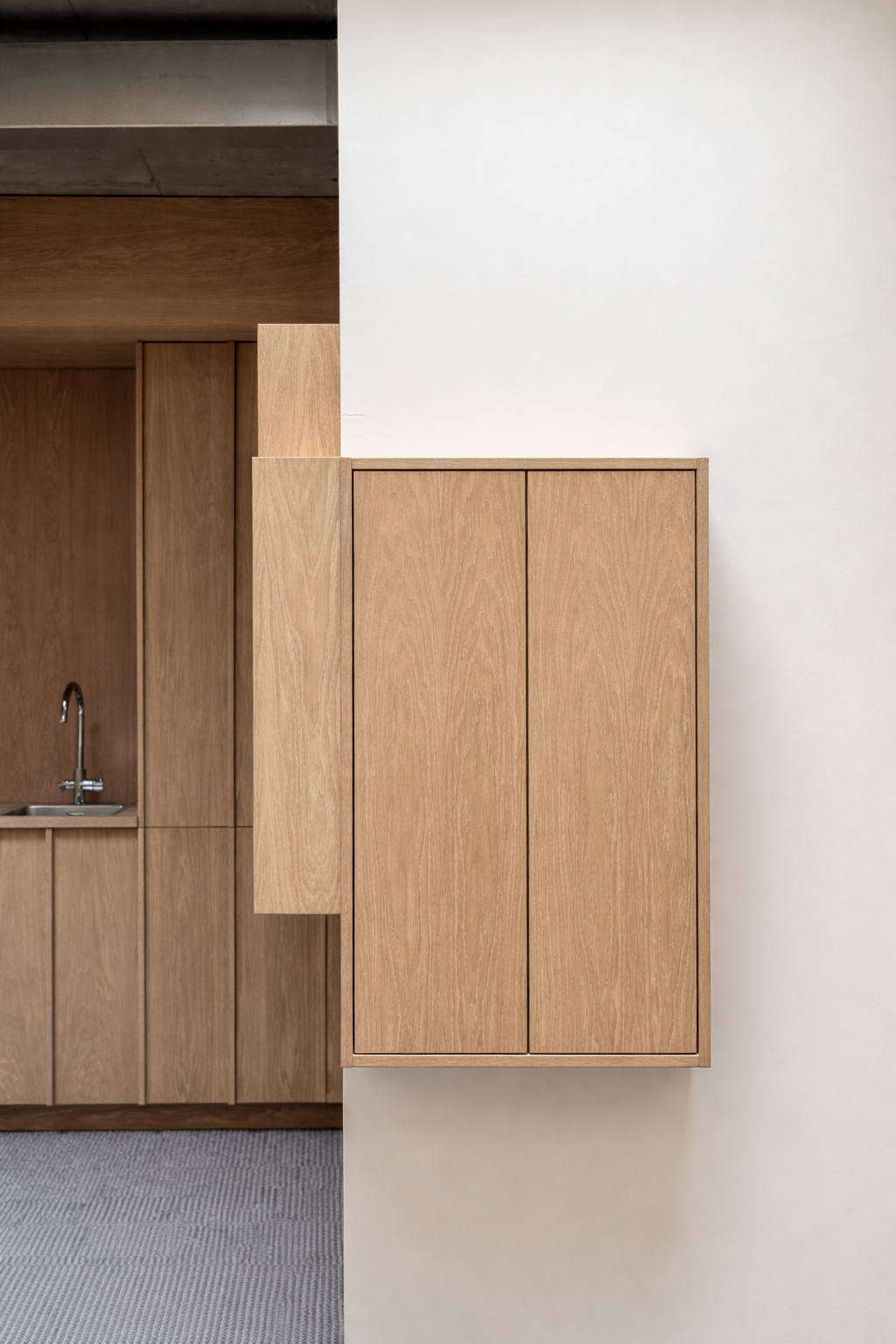
The material palette is deliberately limited to exposed concrete, light oak and neutral surfaces. The selection prioritizes durability, simplicity and stable working conditions.
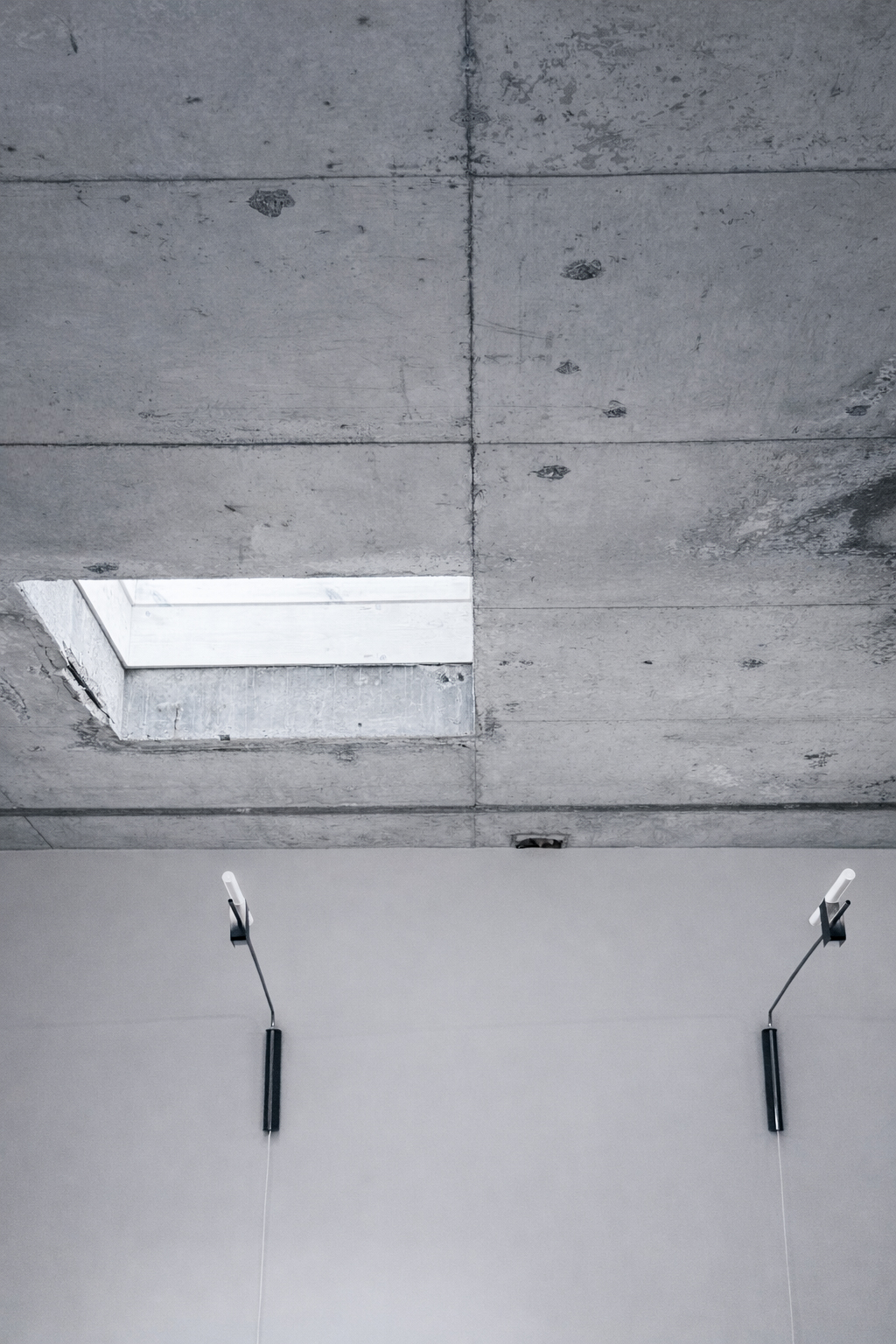
Rather than imposing a new form, the project reveals and reorders the existing structure. A former technical back-of-house area has been transformed into a clear, daylit and calm architectural workspace.